
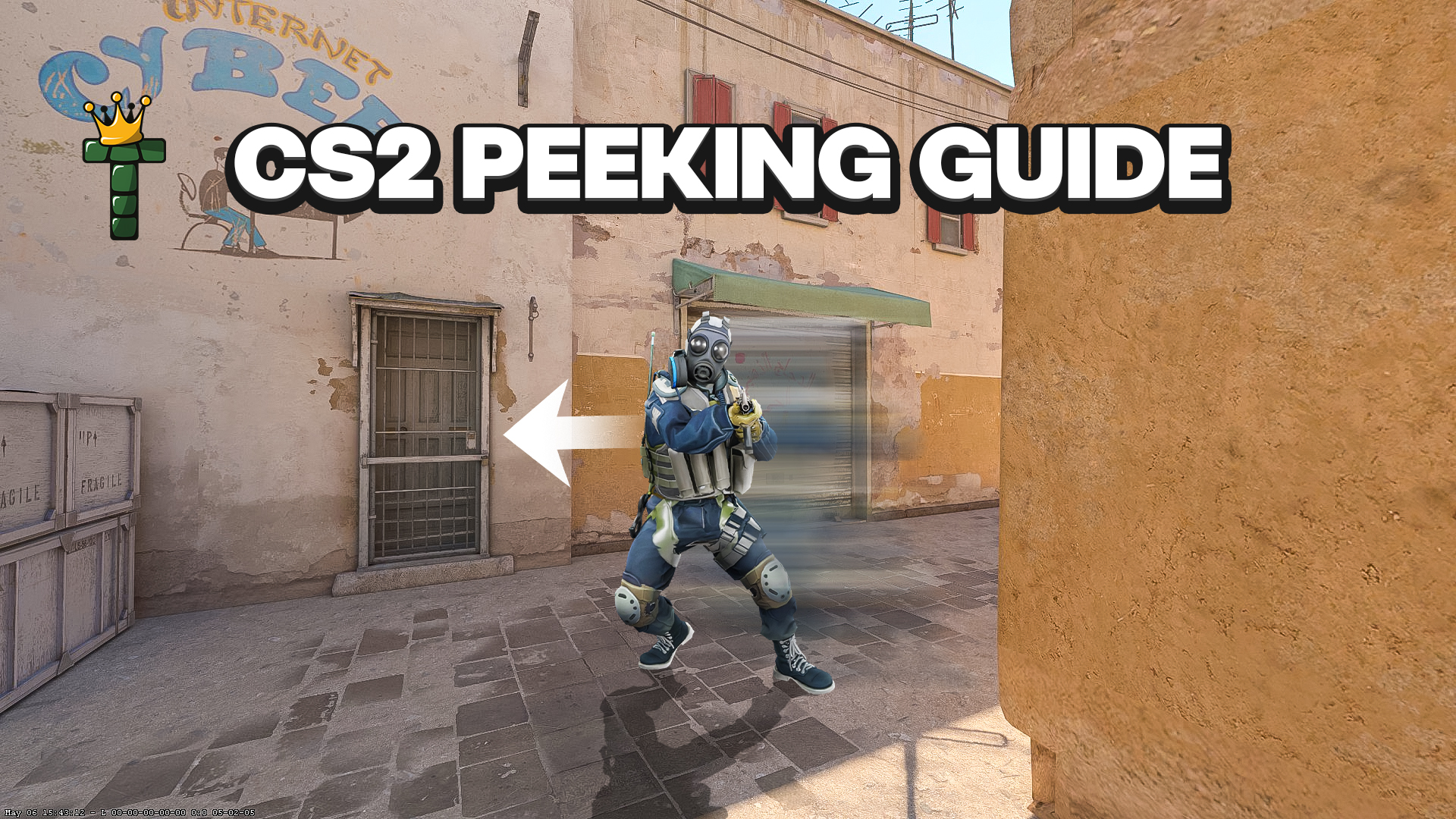
CS2 Peeking Guide: Fast, Wide, and Shoulder Peeks Explained
Peeking means leaving cover to collect info, take a fight, or catch an enemy off guard. A good peek wins rounds, and a bad one gets you killed, so it's one of the clearest differences between players who just move a lot and players who are actually dangerous.
What is peeking
Peeking is when you quickly step out of cover to gather information about the enemy, to get a kill, or to do both at once. Getting info and a kill from the same peek is the harder skill, and most players only start doing it naturally after thousands of hours in the game.
Peeker's advantage
Before getting into the different types of peeks, it helps to understand why peeking usually favors the peeker. Part of it is CS2's netcode. Because of server interpolation and the way ping gets compensated, the player moving into an angle sees the stationary player a little sooner than the stationary player sees them. CS2's sub-tick system narrowed this gap compared to CS:GO but didn't remove it. The effect is small, and it's still a big reason why holding the same corner all round isn't as safe as it feels.
The fast peek
A fast peek is a sharp strafe out of cover and straight back. The whole move takes under a second, which usually isn't enough time for the enemy to react. Use it to bait an AWP shot, check whether someone's holding an angle, or land one shot and get back before the enemy can trade. It works best with lighter weapons, since you move faster and are harder to track.
The shoulder peek is a variant where you show almost nothing, just enough to bait an AWP into firing. The AWP's reload takes 3.7 seconds, which gives you a real window to push and punish them.
The wide peek
A wide peek swings much further out than you're used to, two or three player-widths from the wall. That sounds suicidal, but a defender holding a tight angle has to drag their crosshair a long way to follow you, and you kill them during that drag. You need information first, though. You should already know roughly where they're standing and that they're holding a standard angle. A blind wide peek usually just gets you killed.
The "Ferrari peek" is a team version of this. One player swings wide to pull the defender's crosshair and draw their shot, and a second player right behind them takes the kill while the defender is still tracking the first.
Any wide peek depends on counter-strafing. Press the opposite movement key right as you want to shoot, and your momentum stops instantly so your bullets go where you're aiming. In CS2, shooting while moving almost never wins a duel.
The close peek
Most players hug the wall when they peek, and that works against them. The closer you are to the corner, the more of your model you expose compared to how much of the enemy's side you can see, because your crosshair sits further back than the edge of your model. Take a step or two back from the wall before you peek and you'll show less of yourself while clearing the angle faster. It's even stronger with a flash from a teammate.
Peeking with the AWP
Heavy weapons need slower, more deliberate peeks than light ones. With the AWP, tap crouch right as you stop moving. That shrinks your hitbox and removes any inaccuracy left over from your movement. Strafe out, get your scope on the wall, and press crouch just before you shoot. Some AWPers jump peek for the surprise factor, but that only works in specific spots.
What to practice
Counter-strafing comes first because every peek depends on it. Tap the opposite movement key the moment you mean to shoot and you stop dead with full accuracy. Good aim can't save shots you fire while still moving.
Crosshair placement is what turns a fast peek or a combo peek from a gamble into a plan. Keep your crosshair at head height for the angle you're about to clear so you barely have to adjust it, and you'll land the first shot far more often. If your crosshair sits any lower, you're starting the fight behind.
Listen before you peek. You can hear enemies moving, reloading, or throwing utility well before you see them, and that turns a risky peek into a much safer one.
Players who hold the same angle every round get predictable, and predictable players lose duels. Standing still also puts pressure on them, whether they notice it or not. Peeking well keeps the enemy guessing and gives you more of the map, and the game is more fun that way. Start with fast peeks and counter-strafing, then build from there.